
Skull Defect Reconstruction with Titanium Plates — Exclusively at Nairi Medical Center
Doctors
 Arman P. Hakobyan
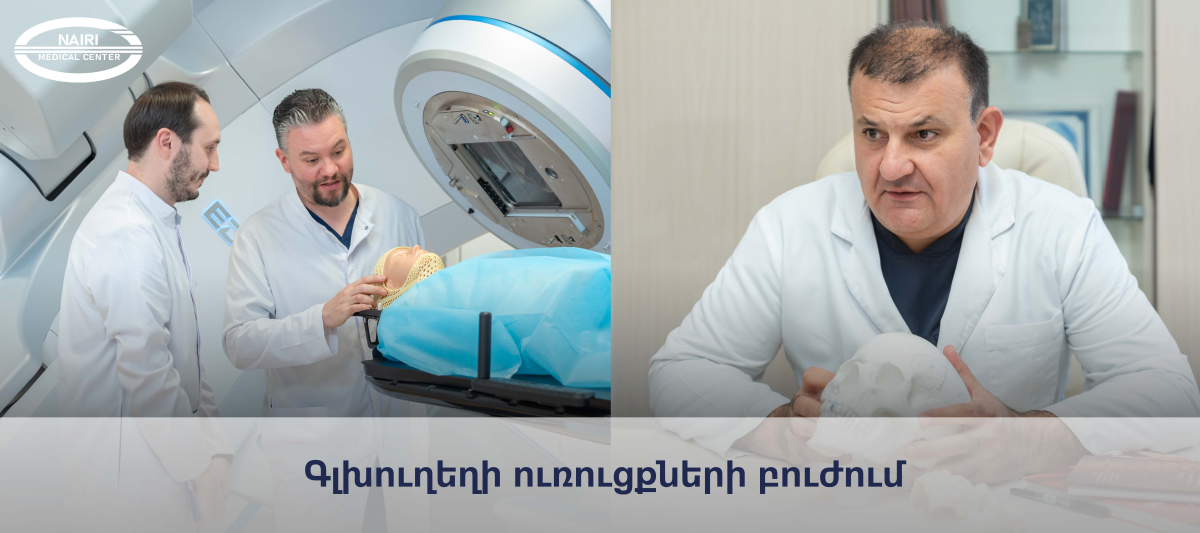
We spoke with Dr. Arman Hakobyan, Head of the Endoscopic Neurosurgery and Spine Surgery Service at Nairi Medical Center, about this innovative method of skull defect repair.
– How do skull defects occur?
– Skull defects usually result from gunshot wounds or traumatic injuries. After such surgeries, patients are often left with large cranial defects. At the site of bone and brain tissue damage, an empty space forms, causing severe deformity and aesthetic disfigurement. In some cases, the appearance is so disturbing that patients avoid social interaction and constantly wear head coverings.
Skull reconstruction surgeries are not new — they have been performed for decades. However, the results have not always been satisfactory. It is nearly impossible to manually reproduce the exact curvature and shape of the missing bone, particularly in large defects, so the aesthetic outcome often remained poor.
This situation led to the development of a new field: skull reconstruction using 3D-modeled titanium plates.
– What is the essence of this method and how does it differ from previous techniques?
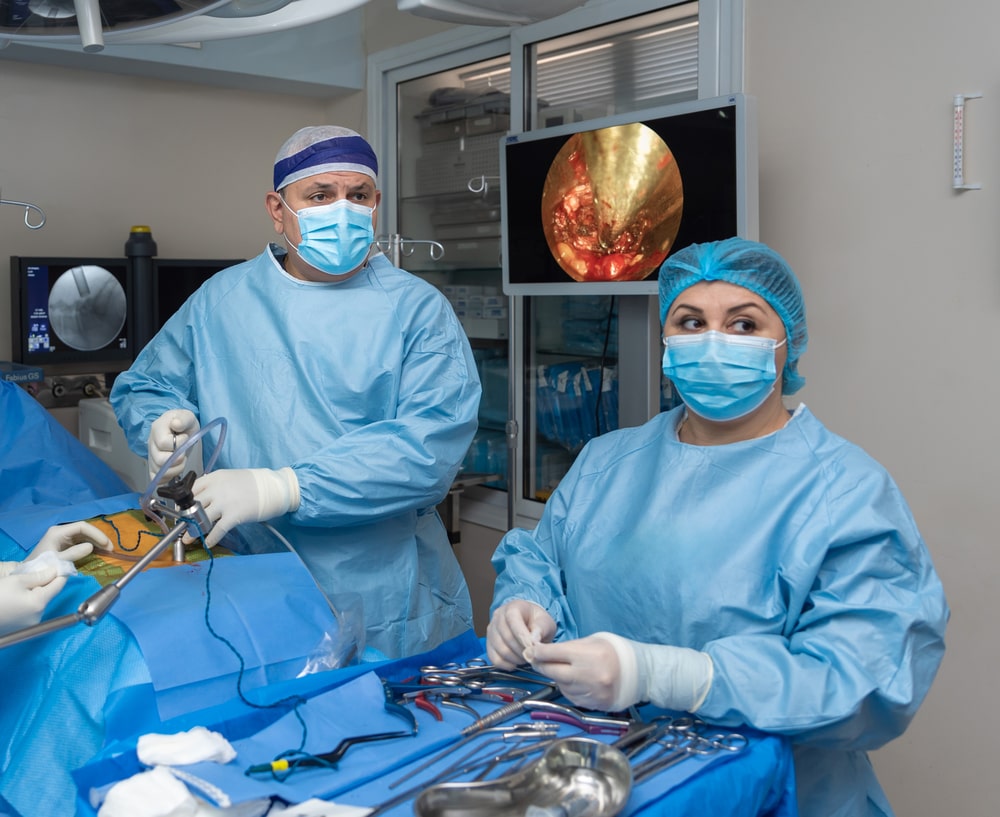
Before surgery, a CT scan of the head is used to design a plastic template of the patient’s skull using special software. Based on this, a titanium plate matching the size, shape, and curvature of the defect is manufactured. During the operation, the plate is easily placed into the defect site and covered with soft tissue.
The advantage lies not only in 3D modeling, which ensures symmetry, but also in the use of titanium. Previously, plastic implants were used, requiring surgeons to carve additional space in the cranial opening, which risked exerting unwanted pressure on the brain.
A titanium plate, only 0.5 mm thick, is placed directly over the bone, without the need to manipulate the margins of the trepanation site. This reduces operative time and eliminates the risk of brain compression.
Advantages of the method:
• 3D modeling ensures symmetry and an excellent postoperative appearance;
• shorter operative time;
• minimal risk of postoperative complications;
• titanium, being the most inert metal, is well accepted by the body, with no reported cases of rejection.
Patients typically begin walking the next day and are discharged on the third day, remaining under observation for about a week.
– How was this method introduced in Armenia?
– I performed this operation for the first time in Armenia at Nairi Medical Center, which remains the only facility in the country where it is available. We have established partnerships with international colleagues for the procurement of titanium plates.
– What successes have you had so far?
– To date, six surgeries have been successfully performed. All patients were young men who sustained disabilities during military service, including participants of the April War. They had previously undergone primary surgeries but were left with large cranial defects. We managed to reconstruct these defects.
It is also important that the government covers the cost of such surgeries, as they are quite expensive. Another benefit of introducing this method in Armenia is the reduction of state expenses: in 2016, one soldier was sent to Germany for surgery at a cost of 30 million drams. Today, with the same amount, we can perform 15 surgeries in Armenia. At our pricing, the procedure costs 2.3 million drams.
An interesting observation: after surgery, patients often show noticeable positive dynamics not only in aesthetics but also in partial functional recovery — some start moving their limbs or speaking again. Perhaps the psychological factor plays a role here as well — the recognition that their service to the homeland is valued.