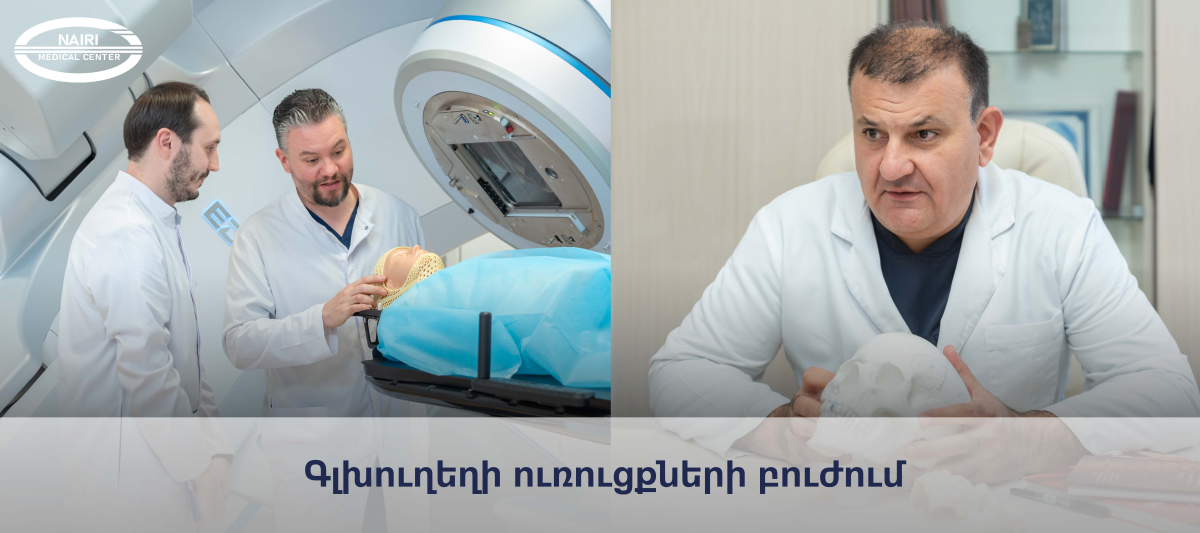

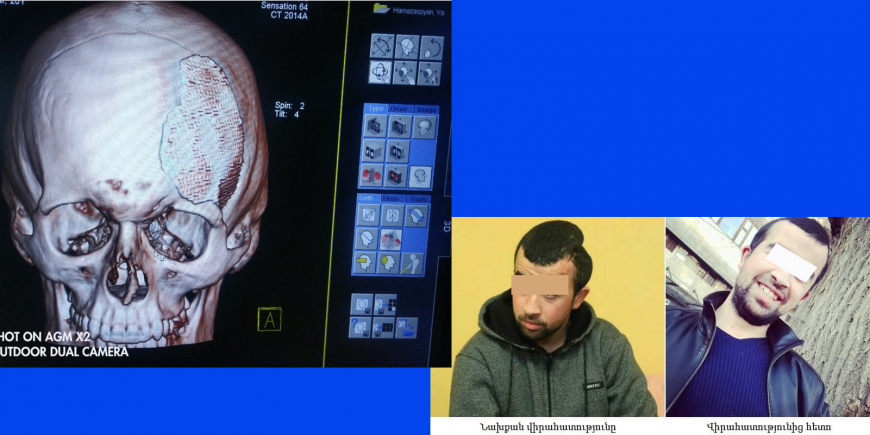
A soldier with a skull injury sustained during military service was recently operated on at Nairi Medical Center. Following a previous surgery, he was left with a large defect in the frontal region extending toward the skull base.
The complexity of the case lay in the fact that the defect was located in the most visible part of the frontal area. Reconstruction of skull base defects is considered highly complex due to the presence of curves and sinuses (paranasal and others). On the one hand, precision and symmetry must be ensured to maintain the aesthetic aspect; on the other hand, the integrity of the sinuses must be preserved.
The patient underwent surgery with the placement of a 3D-modeled titanium plate, which allowed both restoration of the aesthetic appearance and preservation of the function of adjacent structures.
3D-modeled titanium plates offer several advantages: they ensure symmetry and shape, reduce operative time, minimize postoperative complications, and, being the most inert metal, titanium is well tolerated by the human body.
The surgery lasted 2 hours, and the next day the soldier was already walking. On the third day, he was discharged.
It is encouraging that the state covers the costs of such surgeries for soldiers, as these are quite expensive procedures. The patient’s recovery is also aided by the care and attention provided, along with the recognition that his selfless service to the homeland is truly valued.